Pages

Thursday, August 1, 2019

Science


Weather and Climate Change  

Extreme weather


Measuring weather.

Wind


Beaufort
Force
Wind Speed
(KPH)
Spins
Indicators
Terms Used in NWS Forecasts
0
0-2
0
Calm; smoke rises vertically.
Calm
1
2-5
10
Shown by the direction of wind smoke drift, but not by wind vanes.
Light
2
6-12
40
The wind felt on face, leaves rustle; ordinary vanes moved by wind.
Light
3
13-20
80 
Leaves and small twigs in constant motion; wind extends light flag.
Gentle
4
21-29
130
Raises dust and lose paper; small branches are moved.
Moderate
5
30-39
190
Small trees in leaf begin to sway; crested wavelets form on inland waters.
Fresh
6
40-50
250
Large branches in motion; whistling heard in telephone wires; umbrellas used with difficulty.
Strong
7
51-61
320
Whole trees in motion; inconvenience felt walking against the wind.
Strong
8
62-74
390
Breaks twigs off trees; generally impedes progress.
Gale
9
75-87
470
Slight structural damage.
Gale
10
88-101
550
Seldom experienced inland; trees uprooted; considerable structural damage occurs.
Whole gale
11
102-116
640
Very rarely experienced inland; accompanied by widespread damage.
Whole gale
12
117 or more
730+
Very rarely experienced; accompanied by widespread damage.
Hurricane

Wind speed - Making an anemometer.

Anemometer

MATERIALS 


  1. PENCIL.
  2. TAPE.
  3. PIN.
  4. 4 STRAWS (2 CARDBOARD AND 2 PLASTIC)
  5. 4 WHITE CUPS. 

STEPS

  1.   Get 4 white cups.
  2. Put 2 holes in each cup.
  3.  Put the straw that you made in the holes that are in the cup.
  4.   Put a cardboard straw and a plastic straw together (by putting the cardboard straw in a side of a plastic straw)
Once you have made an anemometer we are going to record the wind speed.

Group size: 5

You will need:

Anemometer (above) 

Roles:


  • Timekeeper
  • Counter
  • Recorder
  • Anemometer Manager
  • Wind generator
  1. Mount the anemometer in a place that has full access to the wind from all directions.
  2. When the timekeeper says "Go", the counter in each group will count how many times the marked cup passes them in one minute and write it down.
  3. If possible, repeat the above step four (4) times and record the average number of spins on the chart.

FINDINGS

  • Record how many times it spins using the table below.
You will need to create the wind yourself by blowing. Get 4 different wind speeds by blowing.

You will need to time them and count the number of spins.


Time Interval
Number of Spins
1.


2.


3.


4.


  • Can you make a statement connecting the number of spins of your anemometer and the speed of the wind? 

CONCLUSION:

Thursday, July 25, 2019

Hurumanu - Science - Recycling

Aim: To learn practical ways of recycling so that we can make our world a better place.


How can we prevent climate change by recycling these products?

Plastics:
Cycling or walking: You won't have to use your car and buy fuel for your car.
Paper: You don't have to cut more and more trees down.
Steel: You will be going to need to use coal if we burn all of the steel we have at the moment.


Video questions:


What is Zero Waste?
One of the quickest and the cheapest ways a community can immediately reduce climate impact. What can we do on the planet?

  1.   Recycle.
  2.  Reuse.
  3.  Reduce.
  4. Redesign.
What do we need to recycle?
  1. Plastic - Bottle's, Straw's 
  2. Paper.
  3. Cardboard - Box's
What does recycling do?
cuts down more plastic that is on the land. and if we don't recycle things it kills our animals in the sea.

How much of our rubbish is food scraps?

What does soil due to carbon dioxide in the atmosphere?

What do we need to do?
  1. Make People stop littering in the cities. 
  2. Have Zero tolerance for littering.

What is a carbon footprint?


How can you make your Carbon Footprint smaller?

ENERGY SAVING TIPS FILM


Name 4 of the tips.

  1.   Turn off the lights in a room if there isn't anyone in there.
  2.  Turn off switch's if the device/machine isn't being used by someone
  3.   


AT WHAT RATES DO DIFFERENT ITEMS DECOMPOSE?

MY INVESTIGATION.


Image result for rates of decomposition


Choose 5 items from the list and investigate them. 
Aluminum can.
Plastic 6 pack ring.
Plastic bottle.
Glass bottle.
Milk carton.
You need to answer three questions.

Name: Abby

  1. How long do they take to decompose?
Aluminum can: 200 - 500 years.
Plastic 6 pack ring: 3 - 4 weeks.
Plastic bottle: 450 years
Glass bottle: 1 million years
Milk carton: 5 years
  1. What resource/fossil fuel are they made from?
Aluminum can: 8% of Earth's crust.
Plastic 6 pack ring:
Plastic bottle:
Glass bottle:
Milk carton:
  1. How is this resource recycled?
  2. How does this object contribute to climate change?

I have three goals to try and achieve.

Thursday, July 4, 2019

Science

Solo taxonomy.

1. Prestructural.
-no organisation.
-unconnected ideas.

2. Unistructural.
-one idea.
-shows how connected thoughts.

3. Multi Structural.
-2 or 3 ideas.
-slightly connectedness.


4. Relational.
-make links to other concepts.

5. Abstract.
-Bringing your ideas into other concepts.


Thursday, June 27, 2019

Science - Week 3

AIM: TO LOOK AT THE WATER CYCLE AND how cLIMATE CHANGE IS AFFECTING IT.

Definition:

Water cycle
Image result for what is a water cycle
  1. The cycle of processes by which water circulates between the earth's oceans, atmosphere, and land, involving precipitation as rain and snow, drainage in streams and rivers, and return to the atmosphere by evaporation and transpiration.

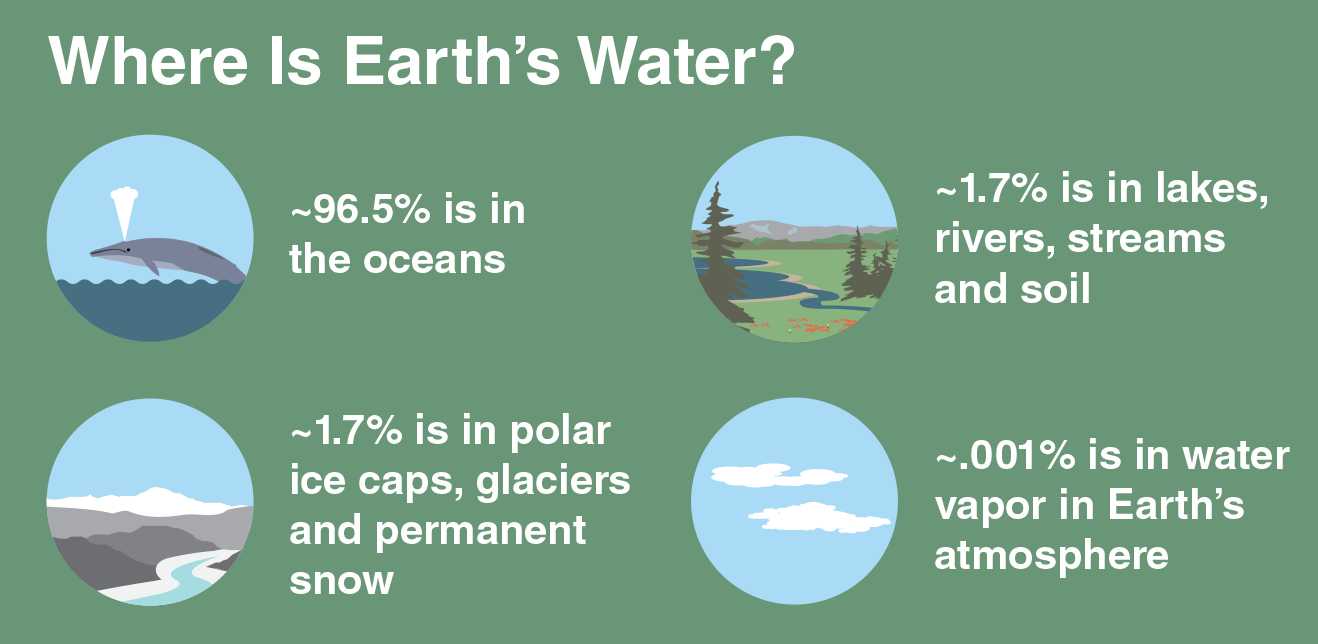
A green box with icons and white text. Text reads: Where is Earth's Water? 96.5 percent is in the oceans; 1.7 percent is in lakes, rivers, streams, and soil; 1.7 percent is in polar ice caps, glaciers, and permanent snow; 0.001 percent is in water vapor in Earth's atmosphere

Scientific words:


  • Evaporation. When water is heated by radiant energy it turns into water vapor.
  • Transpiration. Evaporation from plants.
  • Condensation. When water vapor cools, molecules join together and form clouds.
  • Precipitation. When clouds get heavy the waters falls as rain, sleet, hail, or snow.
  • Acidification: the action or process of making or becoming acidic.

We will be conducting an experiment that looks at the different ways that climate change is affecting the water cycle.
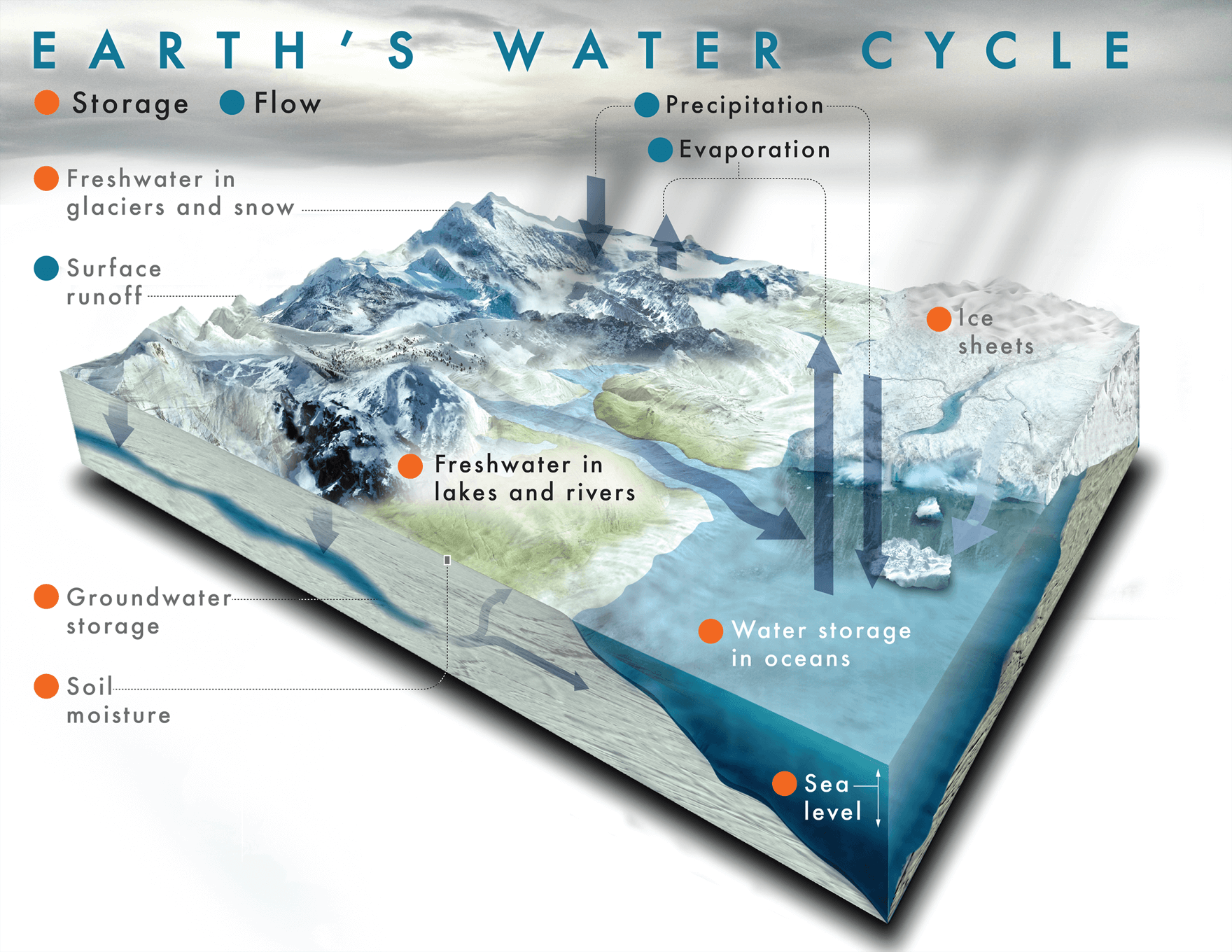
An illustration of the water cycle showing how water travels from rivers and streams to clouds to snow and back again

THE WATER CYCLE EXPERIMENT

Bag 1: Normal Water cycle
Bag 2: Water cycle with CO2 added: like Oceans in climate change
Bag 3: Water cycle with ice added: like Antarctica in climate change

Material:

  1.  Plastic zip lock bag.
  2.  Vivid marker.
  3.  One cup of water.
  4.   2 drops of food colouring.


Steps:

  1.  One person needs to get the plastic zip lock bag and a vivid marker.
  2.  Draw a water cycle on the bag.
  3. Get a cup of water.
  4.  Get a teacher to put two drops of blue food colouring in.
  5. Hang the bag up on a wall and wait.

Two Images:

This is my groups first normal experiment.

My Groups soda water experiment.


Findings:


Conclusion:


Material:

  1. Plastic zip lock bag.
  2. Vivid marker.
  3. One cup of soda water.
  4. 2 drops of food colouring.
  5. Litmus paper.

Steps:

  1. Get a plastic zip lock bag.
  2. Draw on the plastic zip lock bag.
  3. Put one cup of soda water in the plastic zip lock bag.
  4. Get the teacher to put in two drops of blue food colouring.
  5. Hang the bag up on a wall and wait.

Wednesday, June 26, 2019

Charlesworth reserve

The classes who are going to Charlesworth reserve are AL WH and TS are going to Charlesworth reserve to plant native trees for native animals to live on/in here are some images of the place:
Image result for charlesworth reserve imagesImage result for charlesworth reserve imagesImage result for charlesworth reserve imagesImage result for charlesworth reserve imagesAnd more.

The government wants us to plant 1 Billion trees there for more native animals to come along to Charlesworth reserve and have a good life. What we will be planting Native plants for native animals to have a wonderful life in the freedom that they have. People might wonder who charlesworth is named after well i can answer that the reserve is named after Ceafl. And it is also a walk to go do so if you haven't gone to the walk you should try it then. If you are wondering who is the captain of Charlesworth reserve it is Christchurch City Council.

Thursday, June 13, 2019

Science

Aim: To look at the causes of climate change and how to prevent it.


As you watch the video answer these questions:

What is our greatest threat in thousands of years?

How do we see climate change affecting the globe?
  1.   cars and truck ext. are bad because they make the air into pa-looted air that us humans breath in.
  2.   Plants, if u give them too much water the will drown and die like humans basically but plants give us humans oxygen to breath in. 
  3. our threat is that people wont remember this world and it will just be a giant ocean of water and there will be no one on earth living.
  4.   without plants there wont be oxygen without oxygen there wont be people without people there wont be anything accept a planet of water. no land just water.


What is needed to change history?

Is climate change a man made distaster?

Dramaitc action must be made in the next __ years to change it?

Why is our climate changing?

What is causing the warming trend of the climate?

What is the main problem?

What are examples of these?

Burning fossil fuels releases what gas?

How much hotter now is our world?

What do we call this global warming?

How is this affecting creatures / animals like bats?

What percentage of species are near exteinction?

How could this effect the world ecosystems?

What global change was seen and recording breaking last year?

How is climate change affecting our weather systems?
1. 
2. 
3. 

What is another ettect of climate change?

What will happen if the ice melts in Antarctica and the Arctic?

How does this affect people?

What other things affect oceans change?

What does to much heat do to coral?

Why did some industries not want to stop burning fossil fuels?


Stop at 23.39

Investigation

You can decide on how you would like to do this investigation. Your presentation could be on the blog, slides, or power point.

Investigate the different Fossil Fuels listed?

  1. Coal
  2. Oil

Write a paragraph and upload an image about each of these renewable energies.

SolarImage result for photos of solar
WindImage result for photos of wind
Waves  Image result for waves
hydro  Image result for photos of Hydro

Write a reflection about what you have learnt about Climate Change and how it is going to affect 

Coal can affect us and our climate change by Coal causes global warming, which is linked with extreme weather and wildfires. Climate change is coal's most serious, long-term, global impact. Chemically, coal is mostly carbon, which, when burned, reacts with oxygen in the air to produce carbon dioxide, a heat-trapping gas.

Tuesday, June 4, 2019

Hurumanu - Digital tech

Abby's Game

Hi I am Abby, in my group we have been looking at stopping littering

Aim/WALT:
1. We researched 3 kaitiaki they are:
Tangaroa - Oceans/Water
Tanemahuta - Land/People
Tawhirimatea - Air/Wind
I researched these to learn about them. 


2.We did coding on code.org or Code of hour. The aim of the games were to get a certain player safely to where the end is. There were different 

I made a game, this is the link to the game:
 https://gamefroot.com/game/abbys-game

In Reflection: I wish i could have more levels in my game next time and to have more time to finish it. From the start, i have now learnt how to make a game online and publish it.


If you have any questions then comment them bellow.